 Image 1 of 1
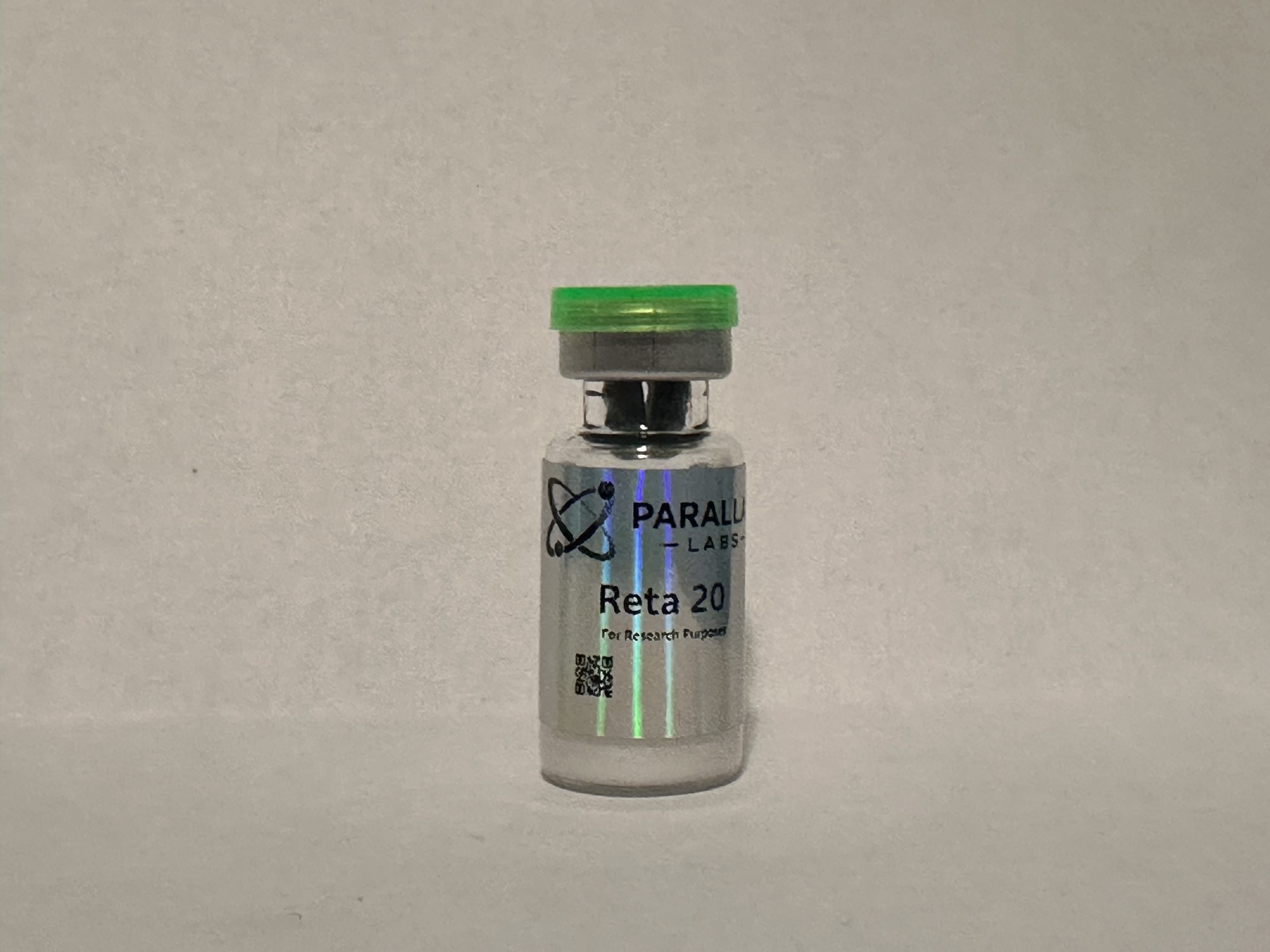
GLP-R3- 20mg
Retatrutide (GLP-3)
What it is
Retatrutide is an investigational peptide-based therapeutic that acts as a triple agonist at the GLP-1, GIP, and glucagon receptors (often referred to as a “GLP-3” agonist).
Designed to combine the appetite-suppressing and insulin-sensitizing effects of GLP-1 and GIP agonism with metabolic rate and weight-loss effects influenced by glucagon receptor activity.
Being evaluated primarily for obesity and metabolic disease (type 2 diabetes, cardiometabolic risk factors).
How it works (mechanism overview)
GLP-1 receptor activation: enhances glucose-dependent insulin secretion, reduces glucagon secretion, slows gastric emptying, and reduces appetite.
GIP receptor activation: potentiates insulin secretion, may improve energy partitioning and adipose tissue metabolism, and can synergize with GLP-1 for greater glycemic and weight effects.
Glucagon receptor activation: increases energy expenditure, promotes lipolysis and fatty acid oxidation; when combined carefully with GLP-1/GIP activity, aims to increase weight loss while limiting hyperglycemia.
As a balanced triple agonist, retatrutide seeks to harness complementary pathways to produce larger reductions in body weight and improvements in metabolic markers than single- or dual-agonists.
Clinical findings (summary)
Early-phase clinical trials have shown substantial dose-dependent reductions in body weight, with many participants achieving clinically meaningful weight loss.
Improvements reported in fasting glucose, insulin sensitivity, and some lipid and inflammatory markers in study cohorts.
Effects on adverse events are similar to other incretin-based therapies: gastrointestinal events (nausea, vomiting, diarrhea, constipation) are most common, usually dose-dependent and often transient.
Careful monitoring in trials for potential cardiovascular effects, changes in heart rate, and signs of hyperglycemia or hypoglycemia (particularly when used with other glucose-lowering agents).
Safety and tolerability
Most frequent adverse events: nausea, vomiting, diarrhea, constipation, decreased appetite.
Injection-site reactions may occur.
Potential risks to consider: pancreatitis (rare but monitored in incretin therapies), gallbladder-related events, and possible thyroid C-cell effects seen in rodent studies of some GLP-1 receptor agonists — relevance to humans is still studied.
In patients on insulin or insulin secretagogues, dose adjustments may be required to reduce hypoglycemia risk.
Not recommended during pregnancy or breastfeeding; evaluate and counsel women of childbearing potential.
Administration and dosing (general)
In clinical development, retatrutide has been administered by subcutaneous injection, typically once weekly, with dose escalation protocols used to improve tolerability.
Exact dosing regimens and approved indications depend on regulatory outcomes and labeling if/when approved.
Who may benefit
Retatrutide (GLP-3)
What it is
Retatrutide (GLP-3)
What it is
Retatrutide is an investigational peptide-based therapeutic that acts as a triple agonist at the GLP-1, GIP, and glucagon receptors (often referred to as a “GLP-3” agonist).
Designed to combine the appetite-suppressing and insulin-sensitizing effects of GLP-1 and GIP agonism with metabolic rate and weight-loss effects influenced by glucagon receptor activity.
Being evaluated primarily for obesity and metabolic disease (type 2 diabetes, cardiometabolic risk factors).
How it works (mechanism overview)
GLP-1 receptor activation: enhances glucose-dependent insulin secretion, reduces glucagon secretion, slows gastric emptying, and reduces appetite.
GIP receptor activation: potentiates insulin secretion, may improve energy partitioning and adipose tissue metabolism, and can synergize with GLP-1 for greater glycemic and weight effects.
Glucagon receptor activation: increases energy expenditure, promotes lipolysis and fatty acid oxidation; when combined carefully with GLP-1/GIP activity, aims to increase weight loss while limiting hyperglycemia.
As a balanced triple agonist, retatrutide seeks to harness complementary pathways to produce larger reductions in body weight and improvements in metabolic markers than single- or dual-agonists.
Clinical findings (summary)
Early-phase clinical trials have shown substantial dose-dependent reductions in body weight, with many participants achieving clinically meaningful weight loss.
Improvements reported in fasting glucose, insulin sensitivity, and some lipid and inflammatory markers in study cohorts.
Effects on adverse events are similar to other incretin-based therapies: gastrointestinal events (nausea, vomiting, diarrhea, constipation) are most common, usually dose-dependent and often transient.
Careful monitoring in trials for potential cardiovascular effects, changes in heart rate, and signs of hyperglycemia or hypoglycemia (particularly when used with other glucose-lowering agents).
Safety and tolerability
Most frequent adverse events: nausea, vomiting, diarrhea, constipation, decreased appetite.
Injection-site reactions may occur.
Potential risks to consider: pancreatitis (rare but monitored in incretin therapies), gallbladder-related events, and possible thyroid C-cell effects seen in rodent studies of some GLP-1 receptor agonists — relevance to humans is still studied.
In patients on insulin or insulin secretagogues, dose adjustments may be required to reduce hypoglycemia risk.
Not recommended during pregnancy or breastfeeding; evaluate and counsel women of childbearing potential.
Administration and dosing (general)
In clinical development, retatrutide has been administered by subcutaneous injection, typically once weekly, with dose escalation protocols used to improve tolerability.
Exact dosing regimens and approved indications depend on regulatory outcomes and labeling if/when approved.
Who may benefit
People with obesity or overweight with weight-related comorbidities seeking pharmacologic weight management.
Individuals with type 2 diabetes who need substantial weight loss and improved glycemic control.
Use should be individualized, considering medical history, concomitant medications, cardiovascular status, and pregnancy potential.
Current status and availability
Retatrutide is investigational and not broadly approved for clinical use at this time. Access is generally limited to clinical trial settings and investigational programs.
Regulatory review and additional studies will determine safety, efficacy, labeling, and availability.
Practical considerations
Discuss goals, expectations, and potential side effects with a healthcare provider.
Lifestyle interventions (diet, physical activity, behavior change) remain foundational and are typically recommended alongside pharmacotherapy.
Ensure appropriate monitoring of blood glucose for people with diabetes and review concomitant medications that affect glycemia.
Report persistent or severe gastrointestinal symptoms, signs of pancreatitis (severe abdominal pain), or other concerning symptoms promptly.
For Research use only.
Retatrutide (GLP-3)
What it is
Retatrutide is an investigational peptide-based therapeutic that acts as a triple agonist at the GLP-1, GIP, and glucagon receptors (often referred to as a “GLP-3” agonist).
Designed to combine the appetite-suppressing and insulin-sensitizing effects of GLP-1 and GIP agonism with metabolic rate and weight-loss effects influenced by glucagon receptor activity.
Being evaluated primarily for obesity and metabolic disease (type 2 diabetes, cardiometabolic risk factors).
How it works (mechanism overview)
GLP-1 receptor activation: enhances glucose-dependent insulin secretion, reduces glucagon secretion, slows gastric emptying, and reduces appetite.
GIP receptor activation: potentiates insulin secretion, may improve energy partitioning and adipose tissue metabolism, and can synergize with GLP-1 for greater glycemic and weight effects.
Glucagon receptor activation: increases energy expenditure, promotes lipolysis and fatty acid oxidation; when combined carefully with GLP-1/GIP activity, aims to increase weight loss while limiting hyperglycemia.
As a balanced triple agonist, retatrutide seeks to harness complementary pathways to produce larger reductions in body weight and improvements in metabolic markers than single- or dual-agonists.
Clinical findings (summary)
Early-phase clinical trials have shown substantial dose-dependent reductions in body weight, with many participants achieving clinically meaningful weight loss.
Improvements reported in fasting glucose, insulin sensitivity, and some lipid and inflammatory markers in study cohorts.
Effects on adverse events are similar to other incretin-based therapies: gastrointestinal events (nausea, vomiting, diarrhea, constipation) are most common, usually dose-dependent and often transient.
Careful monitoring in trials for potential cardiovascular effects, changes in heart rate, and signs of hyperglycemia or hypoglycemia (particularly when used with other glucose-lowering agents).
Safety and tolerability
Most frequent adverse events: nausea, vomiting, diarrhea, constipation, decreased appetite.
Injection-site reactions may occur.
Potential risks to consider: pancreatitis (rare but monitored in incretin therapies), gallbladder-related events, and possible thyroid C-cell effects seen in rodent studies of some GLP-1 receptor agonists — relevance to humans is still studied.
In patients on insulin or insulin secretagogues, dose adjustments may be required to reduce hypoglycemia risk.
Not recommended during pregnancy or breastfeeding; evaluate and counsel women of childbearing potential.
Administration and dosing (general)
In clinical development, retatrutide has been administered by subcutaneous injection, typically once weekly, with dose escalation protocols used to improve tolerability.
Exact dosing regimens and approved indications depend on regulatory outcomes and labeling if/when approved.
Who may benefit
Retatrutide (GLP-3)
What it is
Retatrutide (GLP-3)
What it is
Retatrutide is an investigational peptide-based therapeutic that acts as a triple agonist at the GLP-1, GIP, and glucagon receptors (often referred to as a “GLP-3” agonist).
Designed to combine the appetite-suppressing and insulin-sensitizing effects of GLP-1 and GIP agonism with metabolic rate and weight-loss effects influenced by glucagon receptor activity.
Being evaluated primarily for obesity and metabolic disease (type 2 diabetes, cardiometabolic risk factors).
How it works (mechanism overview)
GLP-1 receptor activation: enhances glucose-dependent insulin secretion, reduces glucagon secretion, slows gastric emptying, and reduces appetite.
GIP receptor activation: potentiates insulin secretion, may improve energy partitioning and adipose tissue metabolism, and can synergize with GLP-1 for greater glycemic and weight effects.
Glucagon receptor activation: increases energy expenditure, promotes lipolysis and fatty acid oxidation; when combined carefully with GLP-1/GIP activity, aims to increase weight loss while limiting hyperglycemia.
As a balanced triple agonist, retatrutide seeks to harness complementary pathways to produce larger reductions in body weight and improvements in metabolic markers than single- or dual-agonists.
Clinical findings (summary)
Early-phase clinical trials have shown substantial dose-dependent reductions in body weight, with many participants achieving clinically meaningful weight loss.
Improvements reported in fasting glucose, insulin sensitivity, and some lipid and inflammatory markers in study cohorts.
Effects on adverse events are similar to other incretin-based therapies: gastrointestinal events (nausea, vomiting, diarrhea, constipation) are most common, usually dose-dependent and often transient.
Careful monitoring in trials for potential cardiovascular effects, changes in heart rate, and signs of hyperglycemia or hypoglycemia (particularly when used with other glucose-lowering agents).
Safety and tolerability
Most frequent adverse events: nausea, vomiting, diarrhea, constipation, decreased appetite.
Injection-site reactions may occur.
Potential risks to consider: pancreatitis (rare but monitored in incretin therapies), gallbladder-related events, and possible thyroid C-cell effects seen in rodent studies of some GLP-1 receptor agonists — relevance to humans is still studied.
In patients on insulin or insulin secretagogues, dose adjustments may be required to reduce hypoglycemia risk.
Not recommended during pregnancy or breastfeeding; evaluate and counsel women of childbearing potential.
Administration and dosing (general)
In clinical development, retatrutide has been administered by subcutaneous injection, typically once weekly, with dose escalation protocols used to improve tolerability.
Exact dosing regimens and approved indications depend on regulatory outcomes and labeling if/when approved.
Who may benefit
People with obesity or overweight with weight-related comorbidities seeking pharmacologic weight management.
Individuals with type 2 diabetes who need substantial weight loss and improved glycemic control.
Use should be individualized, considering medical history, concomitant medications, cardiovascular status, and pregnancy potential.
Current status and availability
Retatrutide is investigational and not broadly approved for clinical use at this time. Access is generally limited to clinical trial settings and investigational programs.
Regulatory review and additional studies will determine safety, efficacy, labeling, and availability.
Practical considerations
Discuss goals, expectations, and potential side effects with a healthcare provider.
Lifestyle interventions (diet, physical activity, behavior change) remain foundational and are typically recommended alongside pharmacotherapy.
Ensure appropriate monitoring of blood glucose for people with diabetes and review concomitant medications that affect glycemia.
Report persistent or severe gastrointestinal symptoms, signs of pancreatitis (severe abdominal pain), or other concerning symptoms promptly.
For Research use only.